
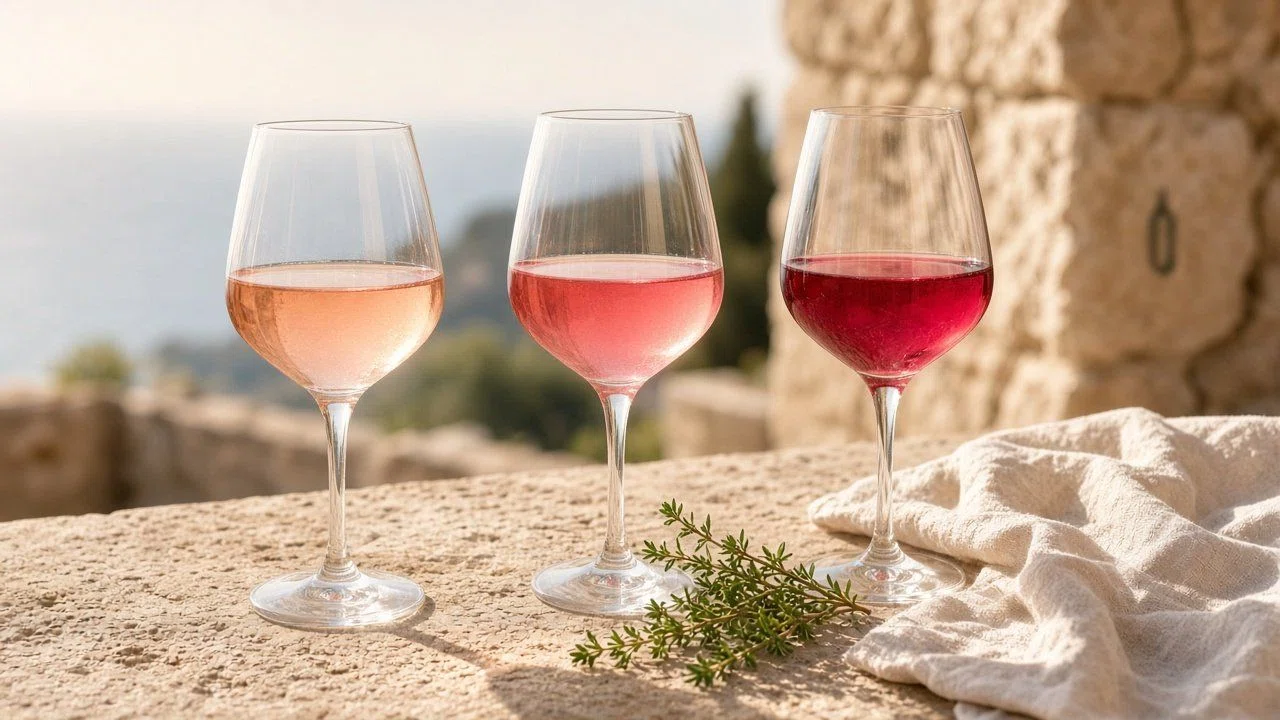
Rosé is made from black grapes, with the skins in contact with the juice for only a short time. That is what gives the wine its pink colour. Most rosé is dry and fresh, with notes of strawberry, raspberry and citrus. Serve it at 8 to 10 degrees.
In this article
Rosé has the image of a sweet summer drink, but that does not hold. Some rosé is light and elegant, some full and spicy, and rosé pairs with food all year round.
How does rosé get its colour?
Rosé is not a blend of red and white wine. The colour sits in the skin of the black grape.
Direct press
The grapes are pressed straight away. The juice colours lightly and the wine becomes pale and delicate.
Maceration
The skins stay in the juice for a few hours. Longer contact gives a darker colour and a fuller flavour.
Saignée
While making red wine, some of the juice is drawn off. That often gives a more powerful rosé.
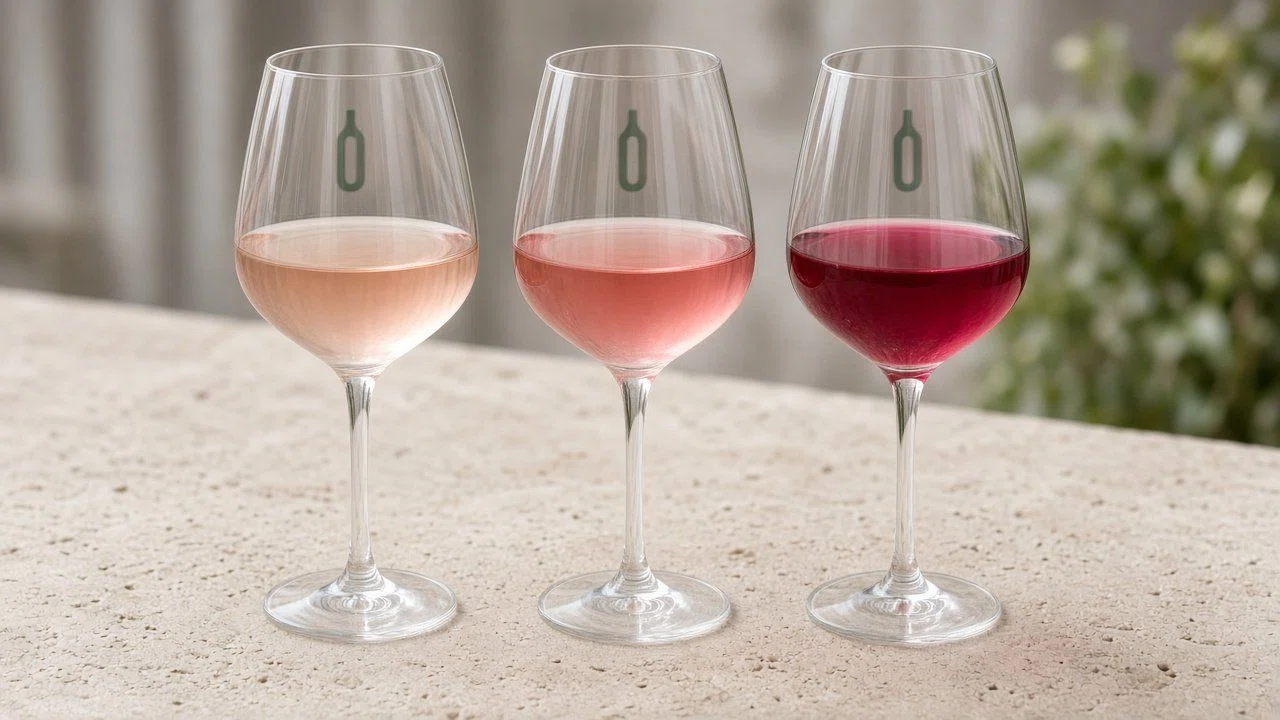
Pale and dry
Provence style
Soft salmon pink, fine and fresh, with citrus and red fruit. Usually from Grenache, Cinsault and Syrah.
Fruity
Approachable
Bright pink, with ripe red fruit and a smooth finish. An easy choice for company.
Powerful
Almost a light red
Deeper in colour, for example Tavel or a Spanish rosado from Garnacha. Sweet rosé, such as White Zinfandel, is the exception.
In Provence, rosé is the main aim, not a by-product. Grapes are harvested early and pressed briefly, which is why the colour is pale and the flavour elegant and dry. Rosé Champagne is a special case: there, red and white may be blended.
What do you eat with rosé?
Salad with goat's cheese or grilled vegetables.
Seafood, prawns and grilled fish.
Charcuterie and tapas.
Pizza and pasta with tomato sauce.
Spicy dishes, if the rosé is fruity and cold.
With tomato sauce, wine with pasta helps too.
The basic rules from wine with food apply here as well: choose light with light, powerful with powerful.
Beyond summer too
Rosé in autumn and winter
A powerful rosé pairs with roast chicken and mushrooms. A sparkling rosé is a fine aperitif during the holidays. Serve at 8 to 10 degrees: too cold makes it tasteless, too warm makes it heavy.
Choose your style
Four rosés from the range
Serve rosé at 8 to 10 degrees. Too cold flattens the fruit.
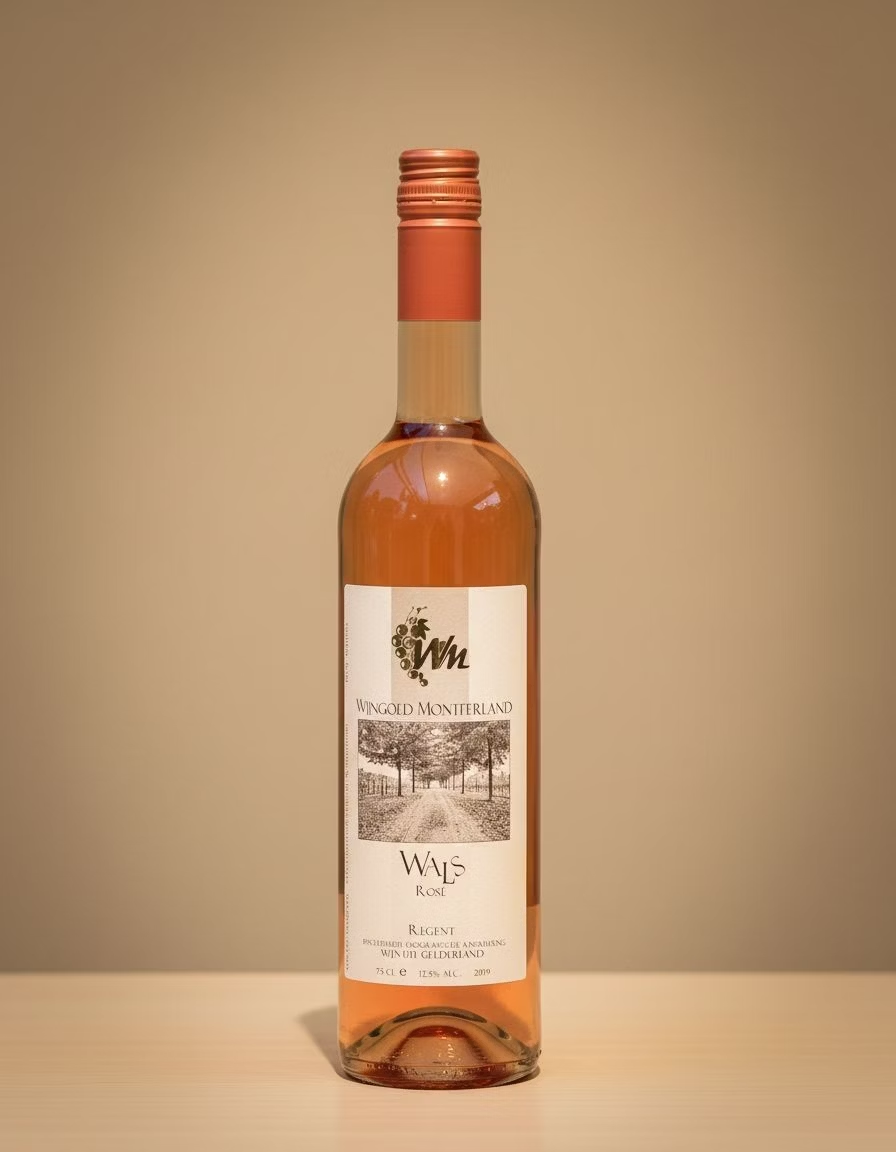 Fruity
Wals Rosé
Regent · Gendringen
Ripe red fruit and a smooth finish.
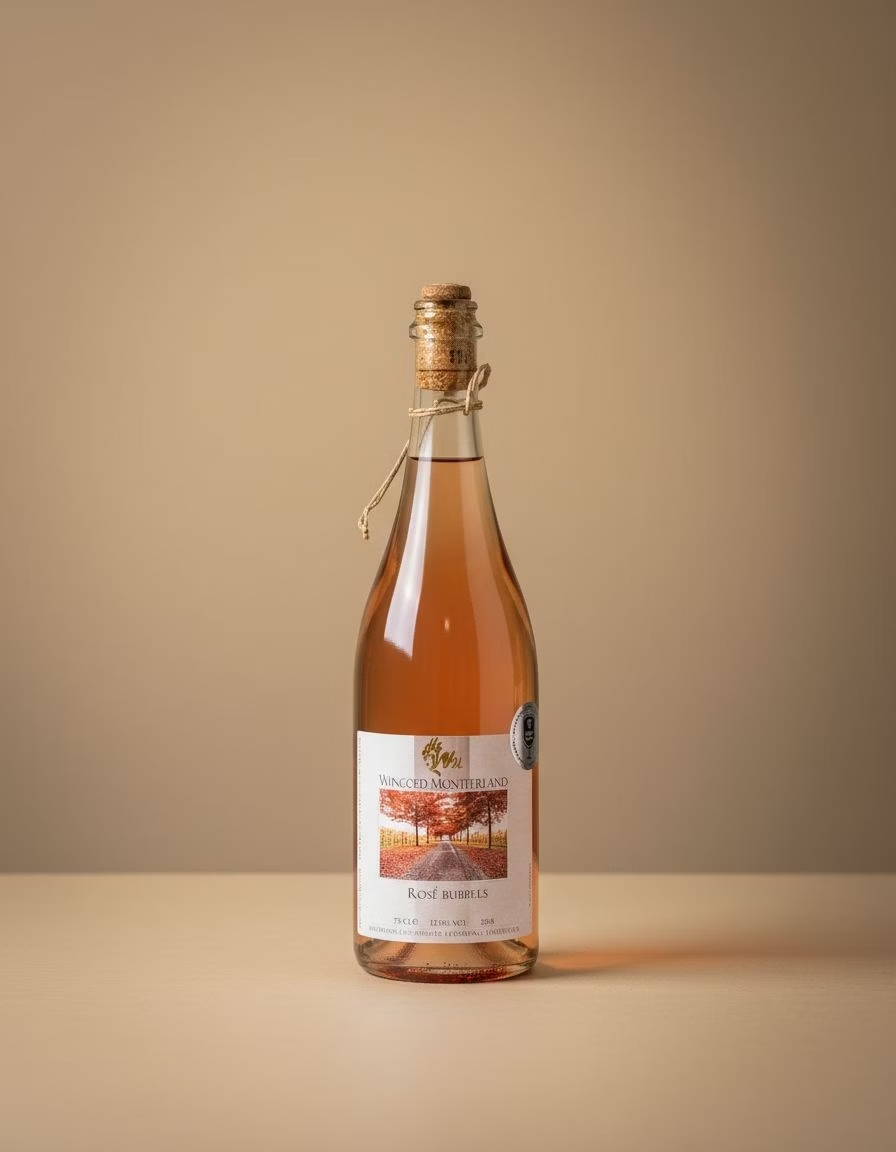 Rosé
RoséRosé Bubbels
Regent · Gendringen
Another style to taste alongside the others.
Frequently asked questions
Is rosé sweet or dry?
Most rosé is dry. Sweet rosé exists, but it is the exception. The sweetness level is sometimes shown on the label.
How is rosé made?
Rosé is made from black grapes. The skins stay in contact with the juice only briefly, which gives the pink colour. It is not a blend of red and white wine.
How cold do you serve rosé?
Serve rosé at 8 to 10 degrees. Too cold makes the wine tasteless, too warm makes it heavy.
Keep exploring the winewise guide
Filter by taste, region or grape and discover quality wines from independent merchants — or read on and learn how to choose your next bottle.
Keep reading
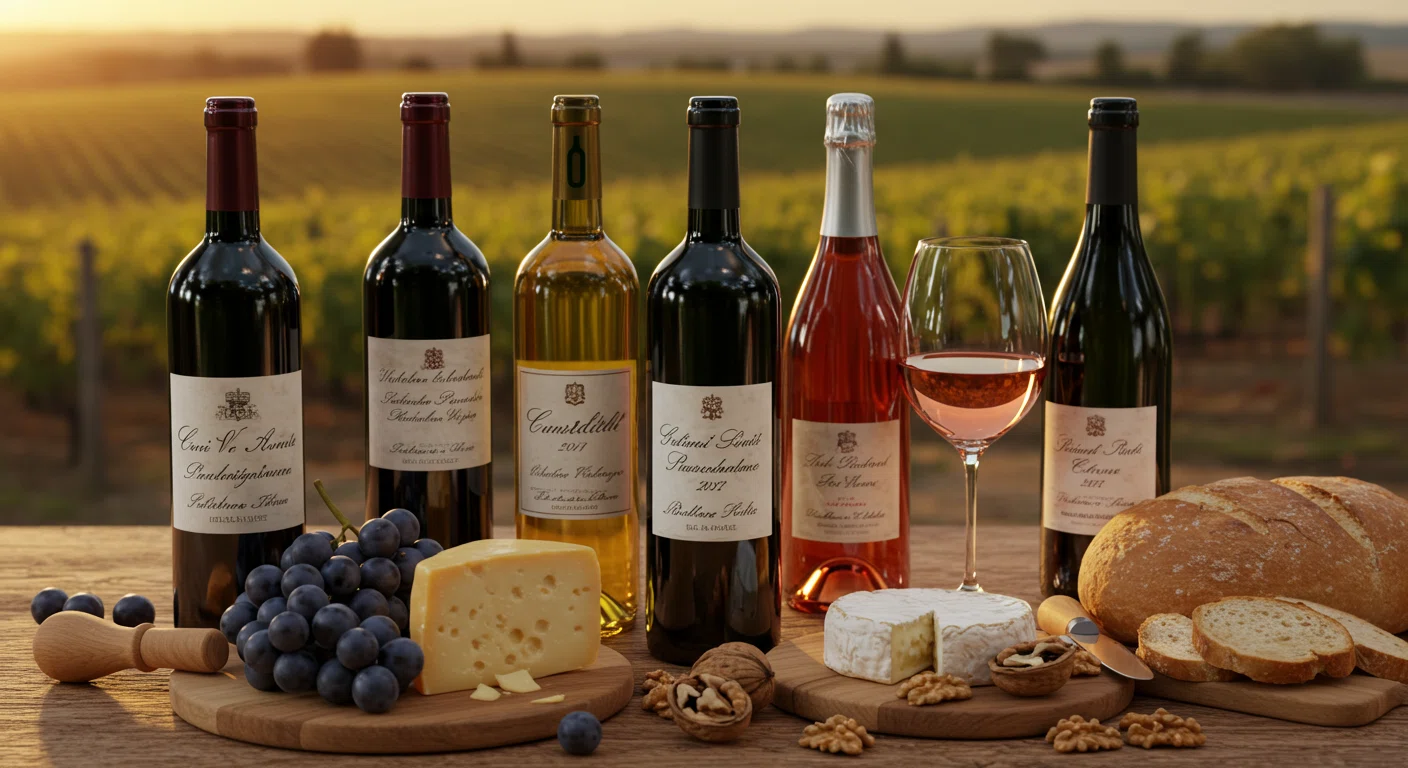
Wijnsoorten eenvoudig uitgelegd: rood, wit, rosé en mousserend
Basis kennis over wijnsoorten voor beginners: van droge witte wijn tot champagne en dessertwijn.
Read article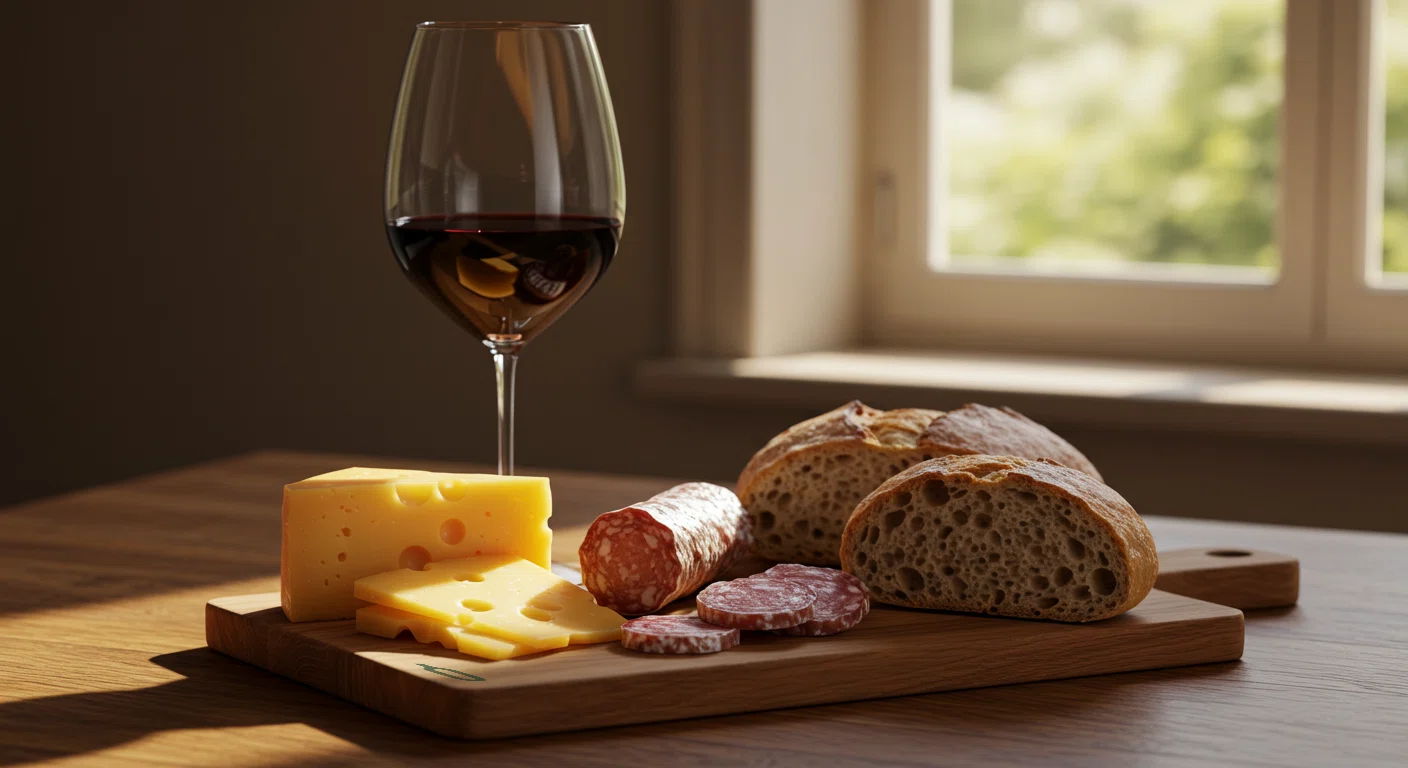
Wijn bij eten: eenvoudige regels voor een perfecte combinatie
Eenvoudige regels voor wijn-spijs: licht bij licht, krachtig bij krachtig, en wanneer je juist contrasteert.
Read article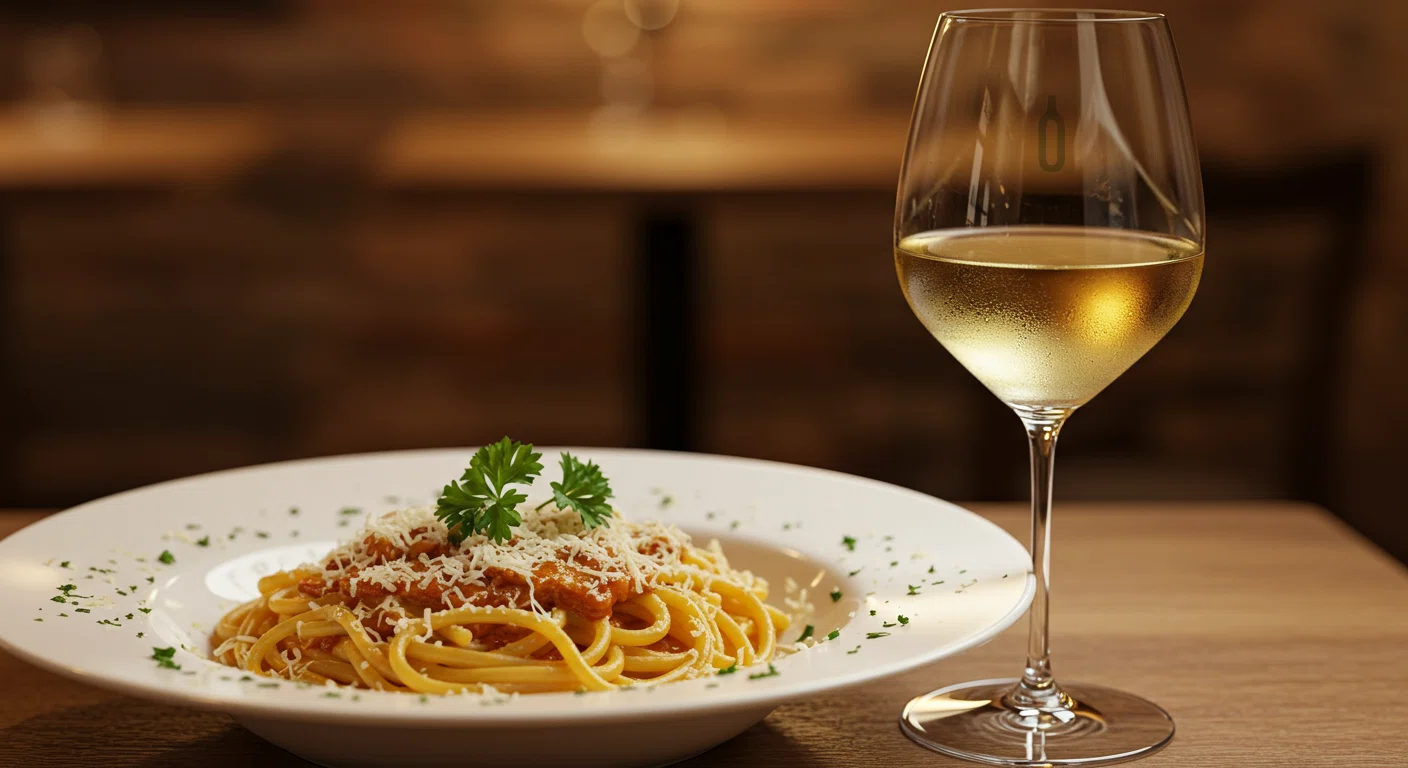
Wijn bij pasta: rood, wit of rosé? Dit zijn de beste combinaties
Rood, wit of rosé bij tomatensaus, roomsaus of pesto? De beste Italiaanse combinaties.
Read article