
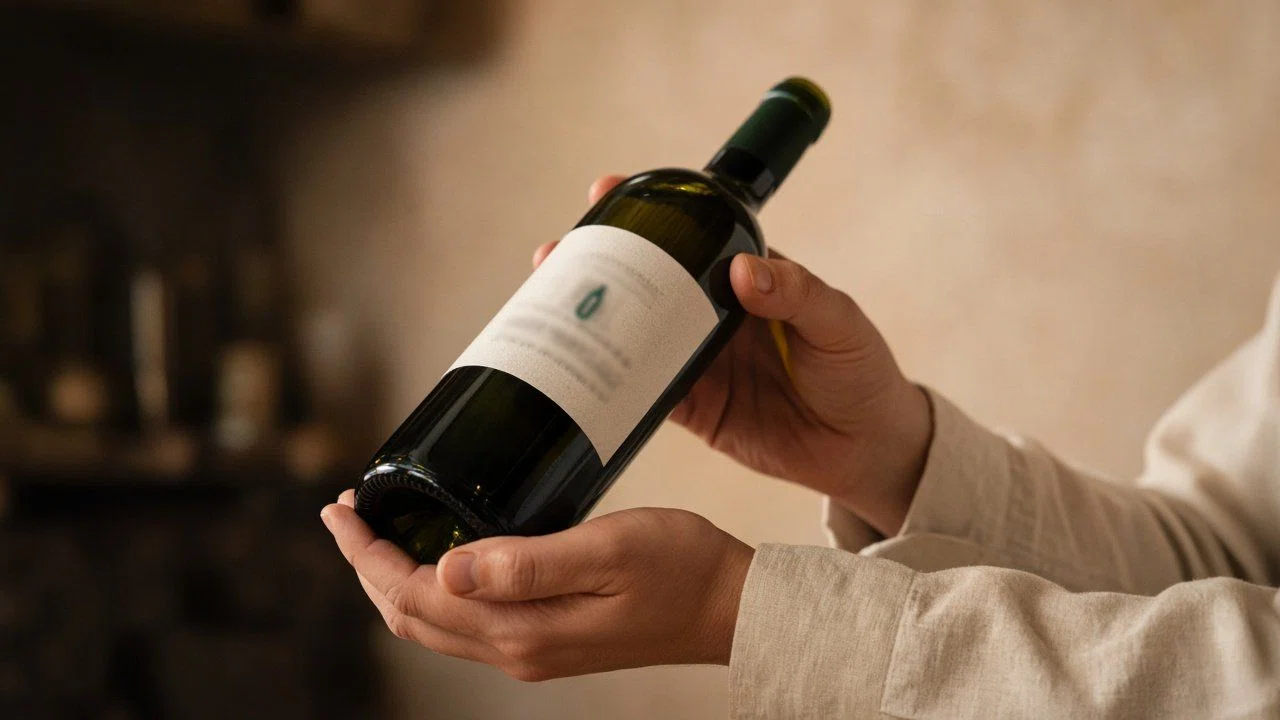
On a wine label you look for five things: the producer, the origin, the grape (not always), the vintage and the alcohol percentage. The more specific the origin, the more the wine says about its character. Bordeaux Supérieur says more than a generic French red.
In this article
Standing in front of a shelf full of bottles, the label is your guide. With this guide you can read it in half a minute.
The label in five steps
Producer. The name of the winery. Mis en bouteille au château or imbottigliato all'origine means the wine was bottled at the estate.
Origin. Country, region or a protected name. The smaller the area, the stricter the rules usually are.
Grape. In the New World the grape is prominent. In Europe the place is often on the label, and you need to know which grape belongs there.
Vintage. The harvest year. In the EU, at least 85% of the grapes must come from that year.
Alcohol. A guide to the body. Around 11% is usually light, above 14% usually full and warm.
Every label also shows the volume, usually 75 cl, and the statement contains sulphites. You can read more about that at sulphite-free wine.
Old World
France, Italy, Spain and Germany put origin first. You need to know the grape.
New World
Chile, Argentina, Australia, South Africa and the US put the grape first. The region is a bonus.
It is neither better nor worse. It is a different way of communicating.
Protected origin by country
France
AOC or AOP, then IGP and Vin de France. Example: Sancerre AOC.
Italy
DOCG, then DOC and IGT. Example: Chianti Classico DOCG.
Spain
DOCa and DO, then Vino de la Tierra. Example: Rioja DOCa.
Germany
Prädikatswein and Großes Gewächs, then Qualitätswein. Example: Mosel Kabinett.
Crianza
At least two years of ageing, of which at least six months in barrel for red.
Reserva
At least three years of ageing, of which at least one year in barrel.
Gran Reserva
At least five years of ageing, of which at least 18 months in barrel.
Italy uses Riserva and Classico. Classico comes from the original core area.
What does the vintage really say?
The vintage says something about the weather, especially in cool regions such as Burgundy, the Mosel and Champagne. In warm regions the difference is smaller. NV means non-vintage: a blend of years for a consistent house style. Older is not automatically better.
Five signs of a good bottle
- 1. The producer is named.
- 2. The origin is specific, a village or sub-region.
- 3. The wine was bottled at the estate.
- 4. The label names grape, year and alcohol.
- 5. The label says what the wine is, rather than only a nice story.
The closure says less than many people think. Read what cork or screw cap does and does not tell you.
Want to put it into practice? With the OnlyWines app you discover the story behind a bottle.
Learn to read with these bottles
France, Italy and Spain
Three bottles from different countries. Look on the label for AOC, DOCG or Reserva.
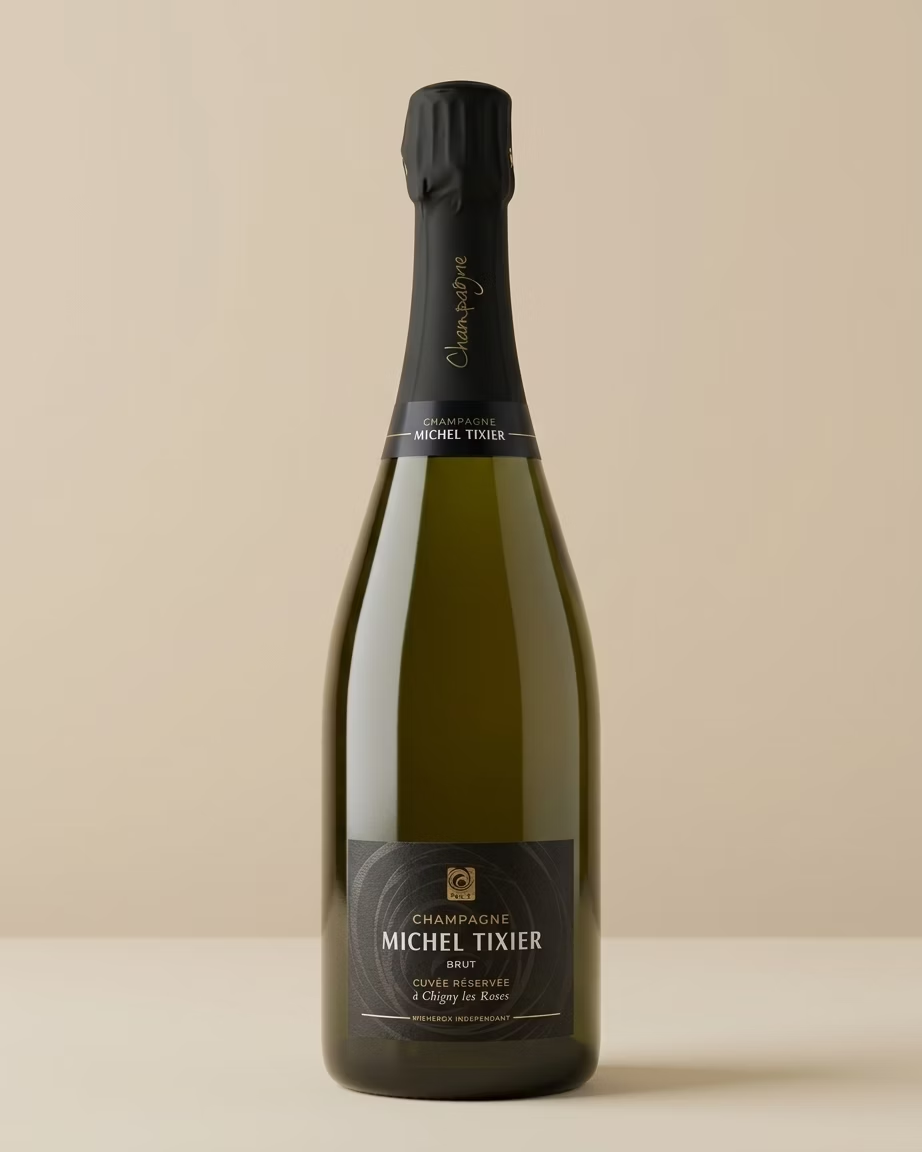 France
Les 9 Cru's Brut Champagne - Michel Tixier
Pinot Meunier, Pinot Noir, Chardonnay · Champagne
Look for the origin: an AOC says more than the country alone.
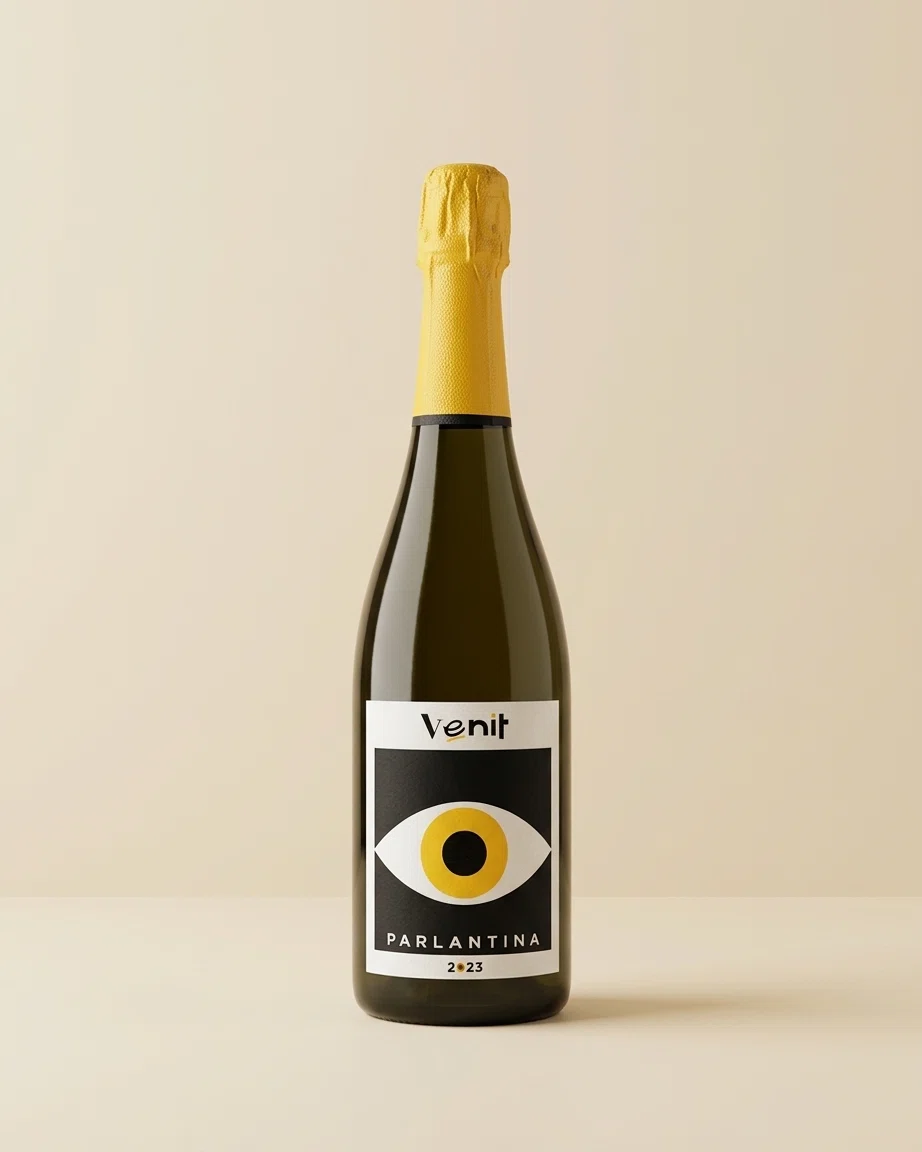 Italy
ItalyParlantina
Bronner · Veneto
DOCG or DOC tells you which protected area the wine comes from.
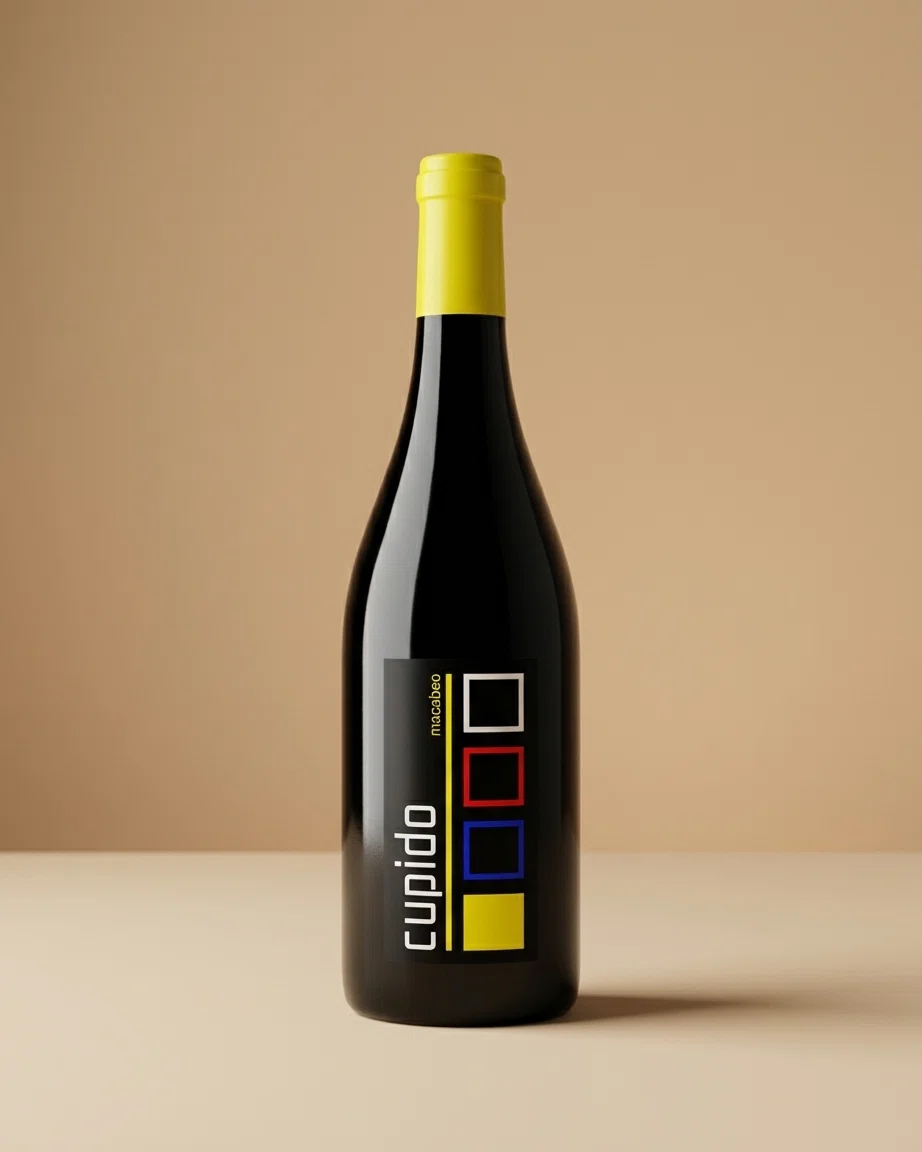 Spain
SpainCupido Macabeo
Macabeo · Manchuela
Crianza, Reserva or Gran Reserva is about ageing, not sweetness.
Frequently asked questions
What does AOC mean on a wine bottle?
AOC stands for Appellation d'Origine Contrôlée, a French protected designation of origin. It guarantees the region, the permitted grapes and the production rules.
What is the difference between Reserva and Gran Reserva?
Both are Spanish terms for ageing. A Reserva ages for at least three years, a Gran Reserva for at least five years, with more time in barrel.
Does the vintage say anything about quality?
It mainly says something about the weather in that year. An older vintage is not automatically better. In cool regions the vintage makes more difference than in warm ones.
Keep exploring the winewise guide
Filter by taste, region or grape and discover quality wines from independent merchants — or read on and learn how to choose your next bottle.
Keep reading
Rode wijn kiezen: waar let je op bij druif, regio en jaartal?
Ontdek hoe je de juiste rode wijn kiest: van druif en regio tot jaartal, tannine en welk gerecht erbij past.
Read article
Wat zijn de belangrijkste wijnregio's en hun typische smaakprofielen?
Ontdek de belangrijkste wijnregio's ter wereld en hun typische smaakprofielen. Van koele Loire tot zonovergoten Puglia: vind jouw favoriete streek en druif.
Read article
Kwaliteitswijn versus huiswijn en supermarkt wijn: wat is het echte verschil?
Ontdek de verschillen in herkomst, productie en smaak tussen huiswijn, supermarkt wijn en echte kwaliteitswijn, en wanneer je welke kiest.
Read article